Tent City Boston
Tent City Boston
The Occupy movement, inspired by the Arab Spring, anti-austerity protests, and the Iranian Green Movement, emerged in 2011. It aimed to address economic inequality, corporate influence, and the unfairness of the financial system. Gaining attention globally, it sparked discussions on wealth distribution and social justice.
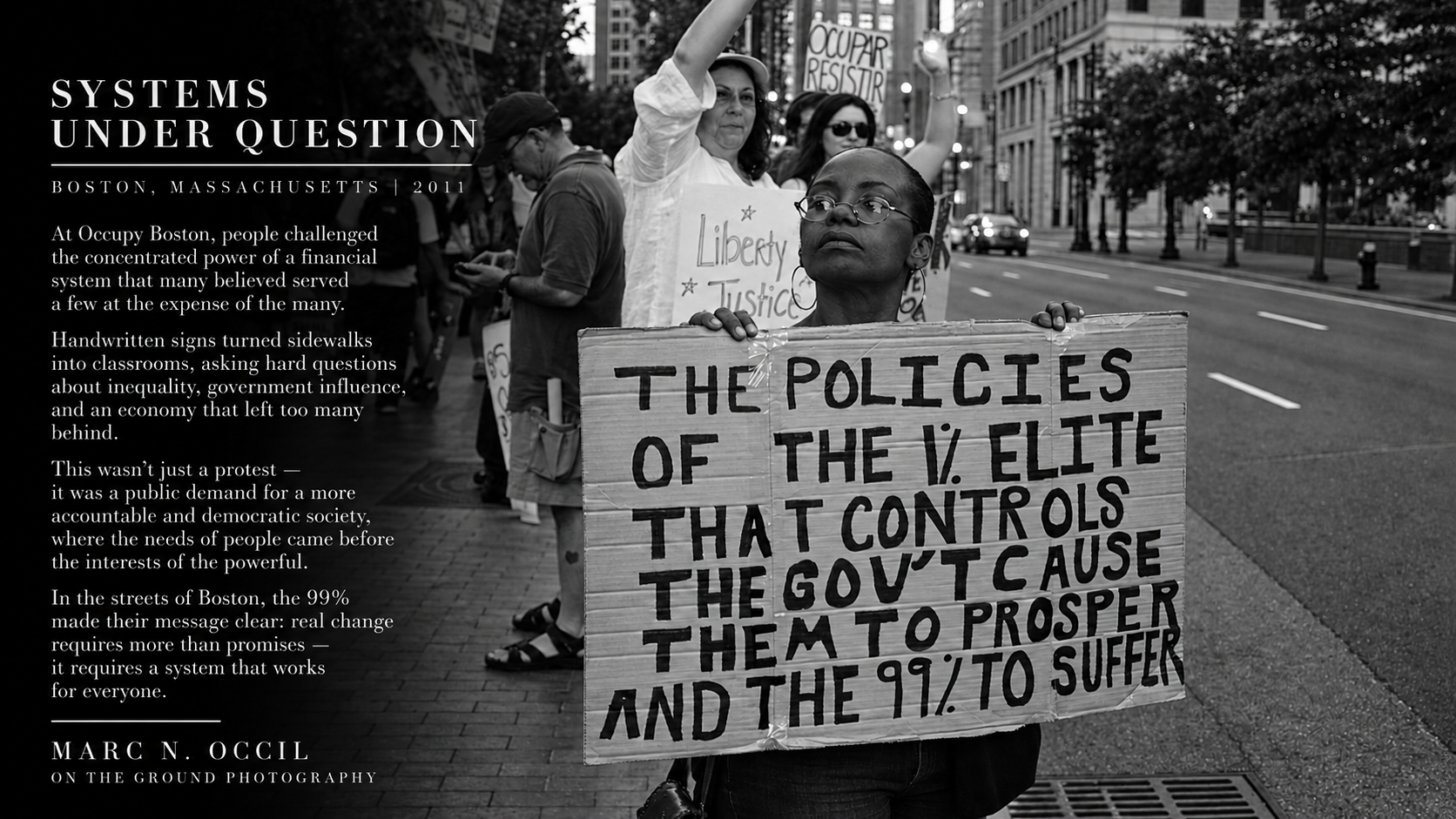
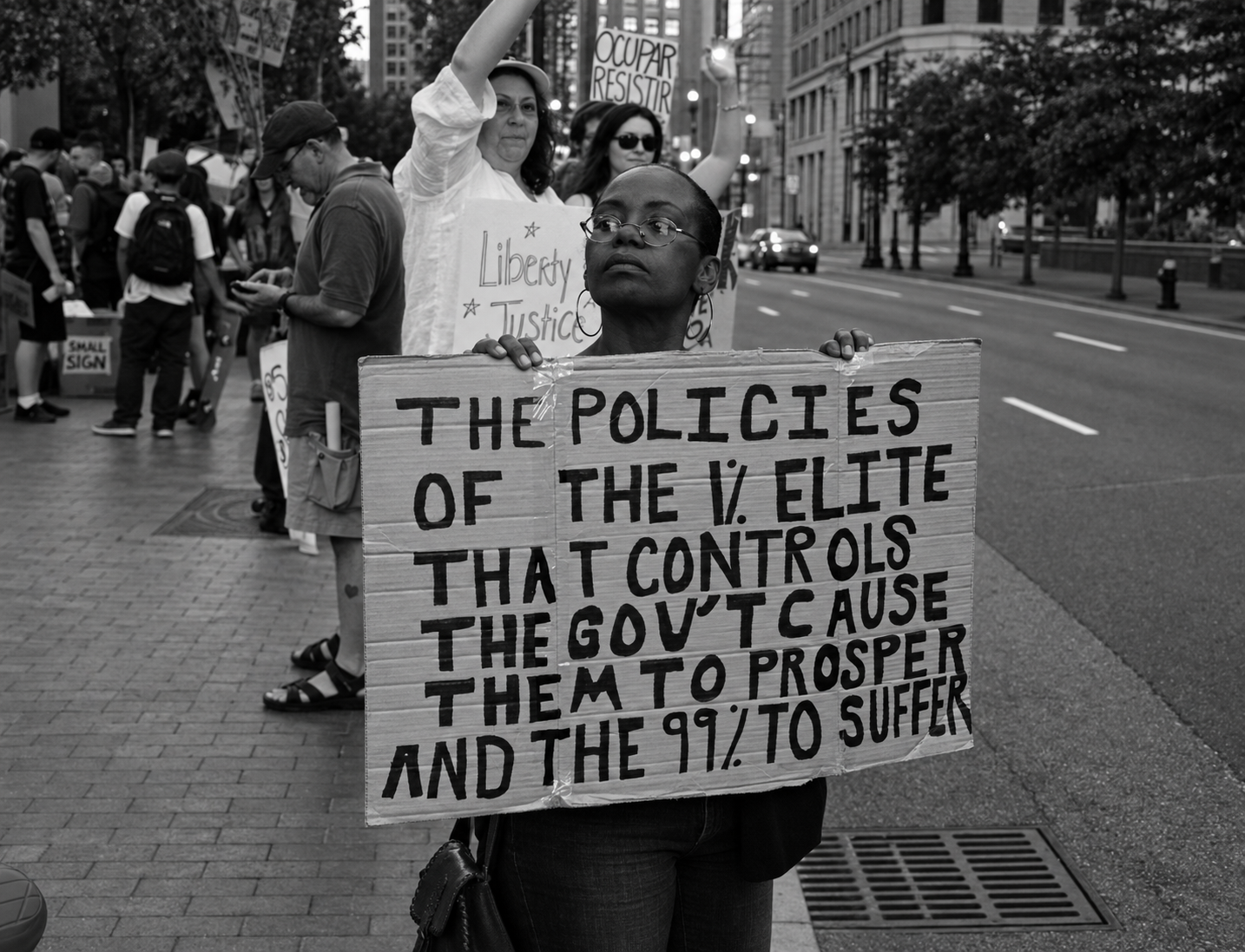
Standing on the street. A Woman raises a handwritten indictment of a system she believes protects, at everyone else’s expense, the wealthy. Her steady expression gives every single word its weight. The surrounding crowd places her within a larger movement, but the directness of the photograph makes this moment entirely her own.
In the early days of the incampmnet, the temporary walkway built leaded through the tightly packed tents of the Occupy encampment. Chairs, tarps, handwritten signs, and improvised structures reveal how protesters turned an open city space into a functioning community. The surrounding office buildings create a sharp visual contrast between established financial power and the people questioning how that power operates.
The Camp Library. Operated by rotating number of volunteers daily, was covered with pamphlets on capitalism, anarchism, political power, and personal freedom. The crowded display shows that the encampment functioned as more than a place of protest. It became an open classroom where participants exchanged ideas and questioned the institutions governing their lives.
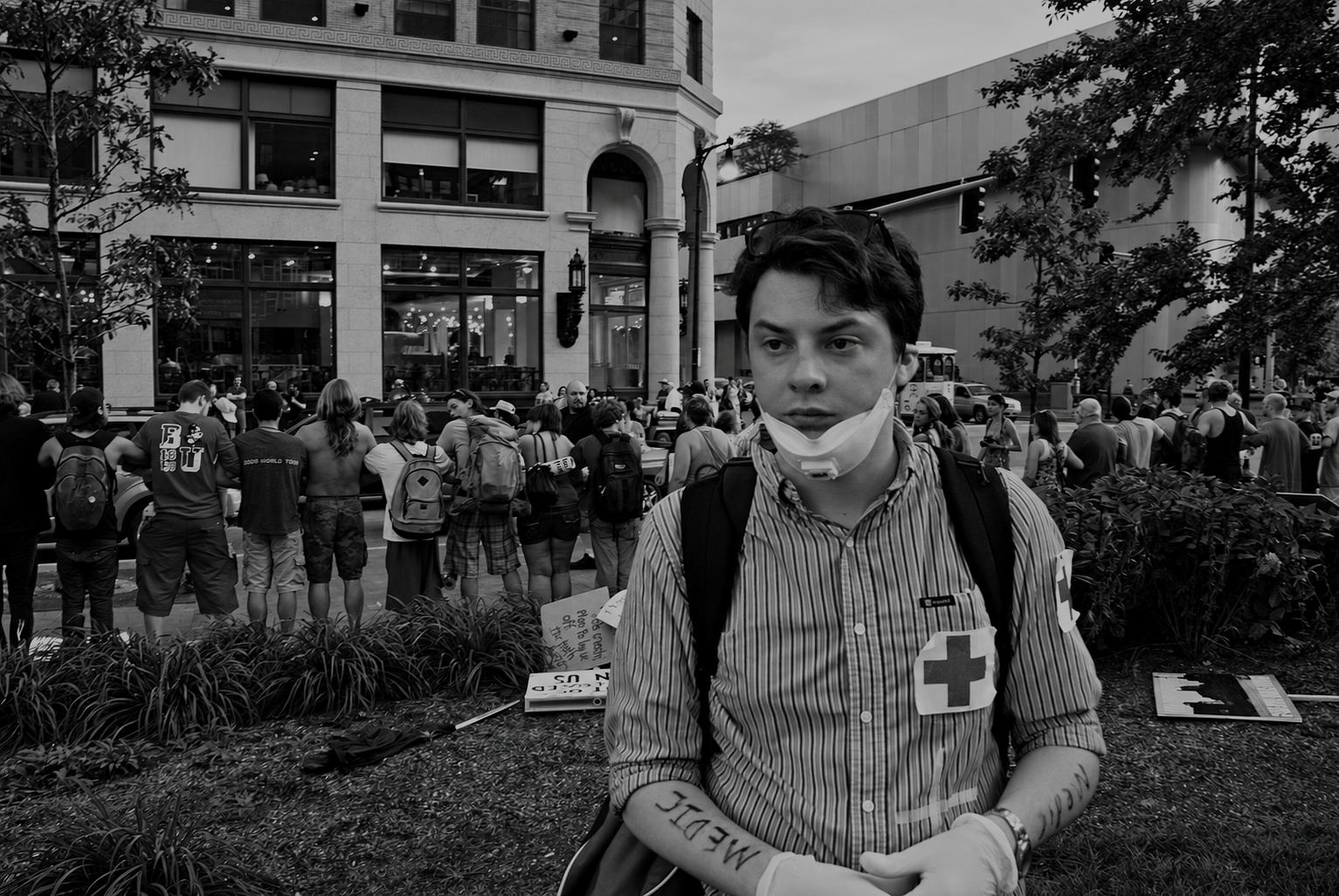
Boston street medics. Volunteers who are trained to offer on-the-spot emergency care, wellness support, and safety monitoring during protests, demonstrations, and public action. They Work small teams, carrying basic medical supplies, and rely on community mutual aid rather than official emergency dispatch. Established during the Civil Rights Movement and anti-war movements in the 1960s His title marked on his Arm to identify himself as the unrest on the Rose Kennedy Greenway began to increase between protesters and the, ever increasing amount of, Boston police officers arriving on the scene.

A representative of Harvard Divinity School stands among the growing crowd with a sign declaring support for Occupy Boston. His presence reflects the range of communities joining the movement. Students, religious groups, labor advocates, veterans, and local residents gathered as protesters prepared to extend the occupation beyond its original Dewey Square boundaries.
Demonstrators link arms beneath the office lights of Boston. Signs call for affordable education, an end to corporate greed, and closer examination of the divide between worker and executive pay. During the early hours of October 11, police moved against the expanded Greenway encampment. The human line became one of the final acts of collective resistance before 141 arrests.